
Jacksonville City Directory Holdings
The verified Jacksonville shelf is modest but useful. The Central Arkansas Library System catalog confirms a physical, noncirculating Jacksonville Phone Book. Its public record does not state the years or publisher, so those facts must be checked with library staff before a date is cited. A second catalog record confirms the Pulaski County Rural Directory, described from 1952 and published by Opha McPherson of Little Rock. That title includes Jacksonville-area people beyond Greater Little Rock and belongs at the center of a mid-century city directory search.
| Local collection | Dated coverage | Research location | Way to use it |
|---|---|---|---|
| Jacksonville Phone Book | Years not stated in public metadata | CALS cataloged PHONE BOOK holding | Physical, noncirculating |
| Pulaski County Rural Directory | Based on 1952 | CALS, call number F417 .P98 .P987 | Two library-use volumes |
| General printed directories | Jacksonville runs not enumerated | Roberts Library | Ask staff about shelves and onsite databases |
| Historic Jacksonville maps | 1972 and 1985 | UCA Archives map collection | Use to reconcile street locations |
| Local history reference | Published 1986; covers 1820-1980 | Siftings from Jacksonville's History | Confirm shelf access before visiting |
This coverage table draws a firm line between a verified holding and an assumed run. No exhaustive Jacksonville publication years, last printed year, reverse-directory span, or digitized local run was found. A useful request names the Jacksonville Phone Book, asks for all cataloged volumes, and asks whether any are arranged by address. That direct question is safer than importing the publication history of Little Rock or another city.
The CALS Jacksonville Phone Book record is the best first proof that the local title exists.
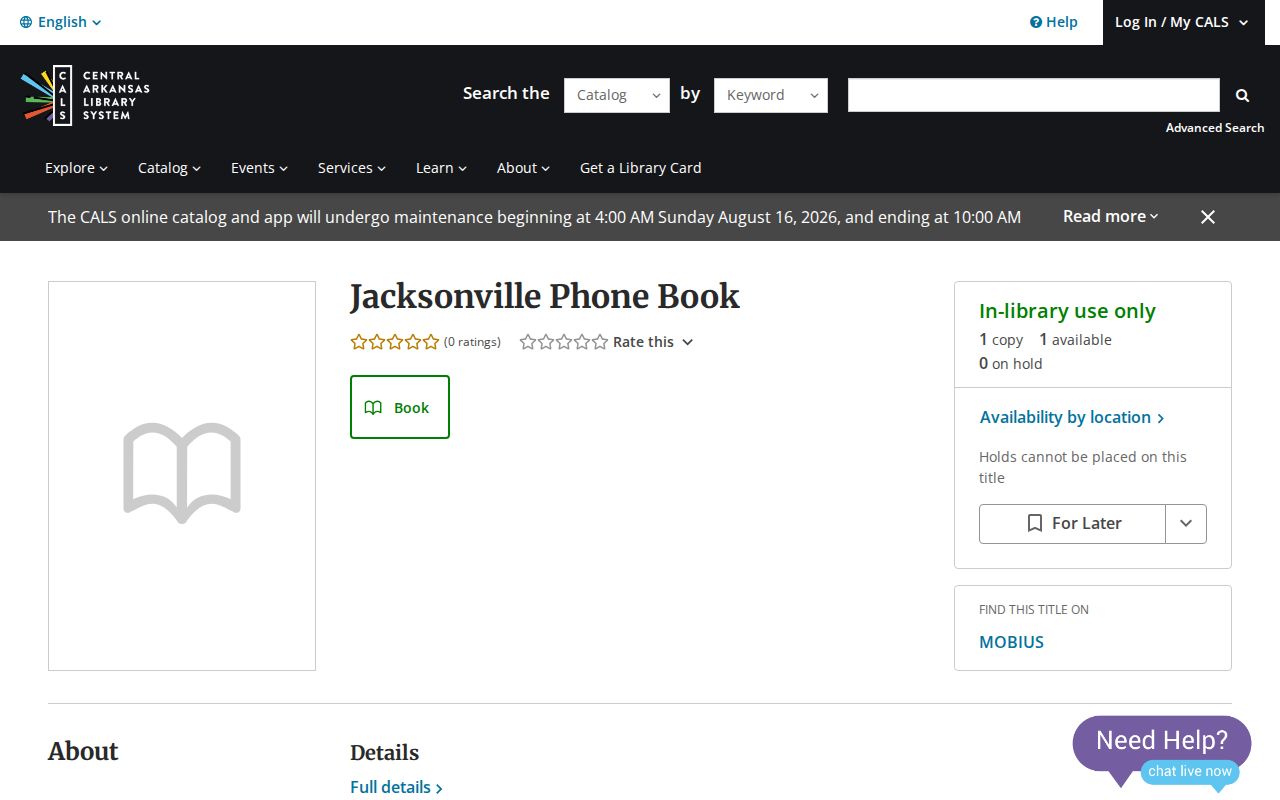
The catalog screen establishes access status while leaving the volume dates open for staff confirmation.
Jacksonville's 1952 Directory Bridge
The rural volume sits at a rare and useful point in Jacksonville history. The public 1950 census records households just before the 1952 directory, while Little Rock Air Force Base opened in 1955. Jacksonville had incorporated in 1941 and then changed fast through the Arkansas Ordnance Plant years and the later base buildout. A name, house address, or mailing point in the rural directory can therefore connect a census household to the next wave of city growth.
The CALS record for Opha McPherson's rural directory identifies the title, its 1952 basis, and its Jacksonville subject coverage.
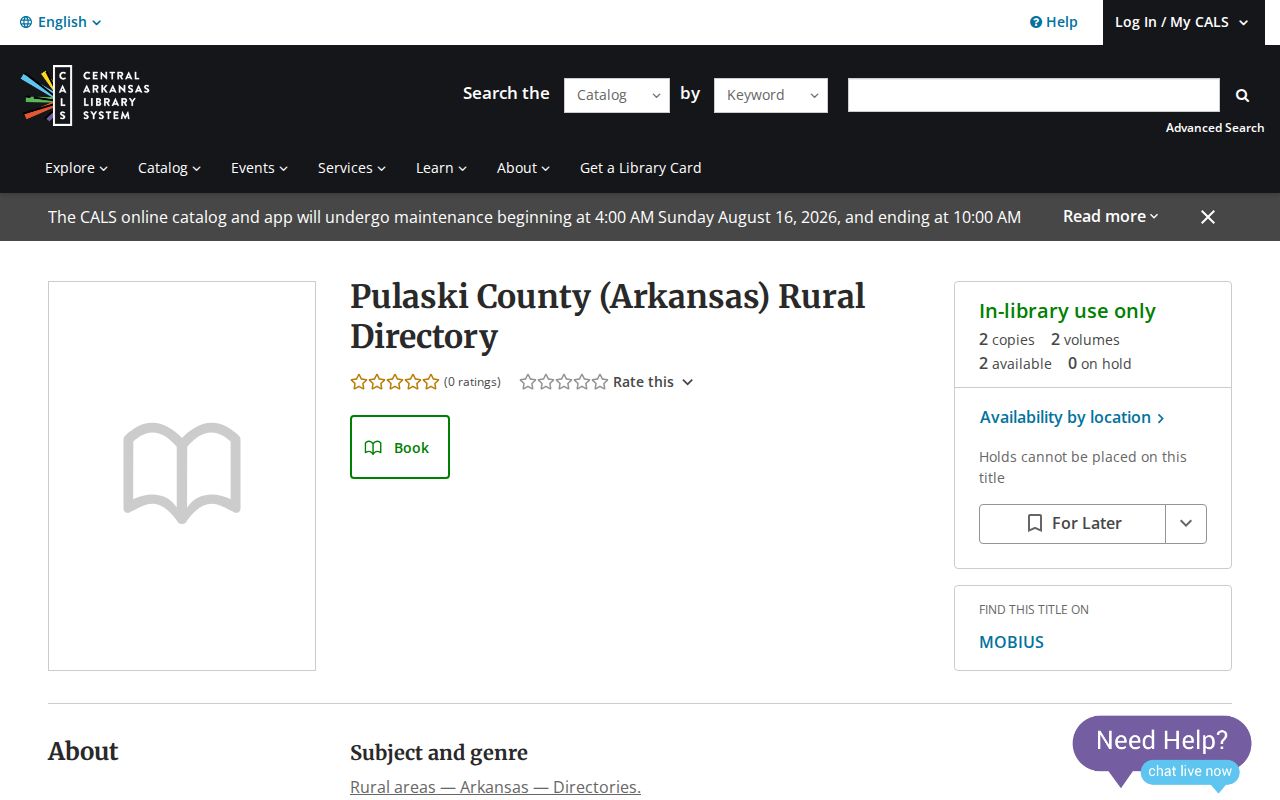
The record also confirms that two copies are for library use, so a visit or staff-assisted check is the sound access route.
Reading Jacksonville City Directory Clues
A sample page was not available in the inspected public catalog. Claims about a spouse field, occupation, phone number, owner mark, widow notation, or street-order section would go beyond the source. The verified rural-directory description supports a narrower inventory. Record the printed form exactly. A mailing address may differ from the place where the person lived, and mileage can help distinguish two rural households with similar names.
| Name | The indexed person as printed; preserve initials, spelling, and order. |
|---|---|
| House address | The residence clue identified in the CALS catalog note. |
| Mailing address | The postal destination, which may not match the house location. |
| Mileage | A distance clue useful for rural placement and same-name comparison. |
| Other information | Inspect the volume and its key before assigning meaning to any added field or mark. |
Photograph or transcribe the title page, date, and explanatory key with the entry. A bare name and address lose the clues needed to judge which edition was used and what each short form means.
- Criss-cross directory
- A volume or section arranged by street address instead of a person's surname. No verified Jacksonville run has yet been identified.
- Householder index
- An address-led list of the person identified with a home. Its exact scope depends on the publisher.
- Abbreviation key
- The publisher's own guide to short forms and symbols. It controls how that volume should be read.
Jacksonville Directory Research at CALS
The Esther DeWitt Nixon Library at 703 W. Main is Jacksonville's local CALS access point. Staff can route a catalog question and provide public computer access, but the specialist genealogy and Arkansas history center is the Bobby L. Roberts Library of Arkansas History & Art at 401 President Clinton Avenue in Little Rock. The inspected research guide lists weekday hours of 9 a.m. to 6 p.m. and Saturday hours from noon to 4 p.m. Calling ahead is wise because the Phone Book years and exact shelf location are not in the public metadata.
The Roberts toolkit extends beyond a historical volume. It names census material, books, microfilm, fire-insurance maps, survey records, and Pulaski County real-estate sources. Ancestry and Newspapers.com are offered in the library, while the CALS guide describes HeritageQuest access with a library card. NewspaperARCHIVE and Chronicling America add more name and address routes. Database licenses and holdings can change, so confirm access before a long trip.
The Roberts Library research collections show how the directory shelf fits into a broader local-history search.
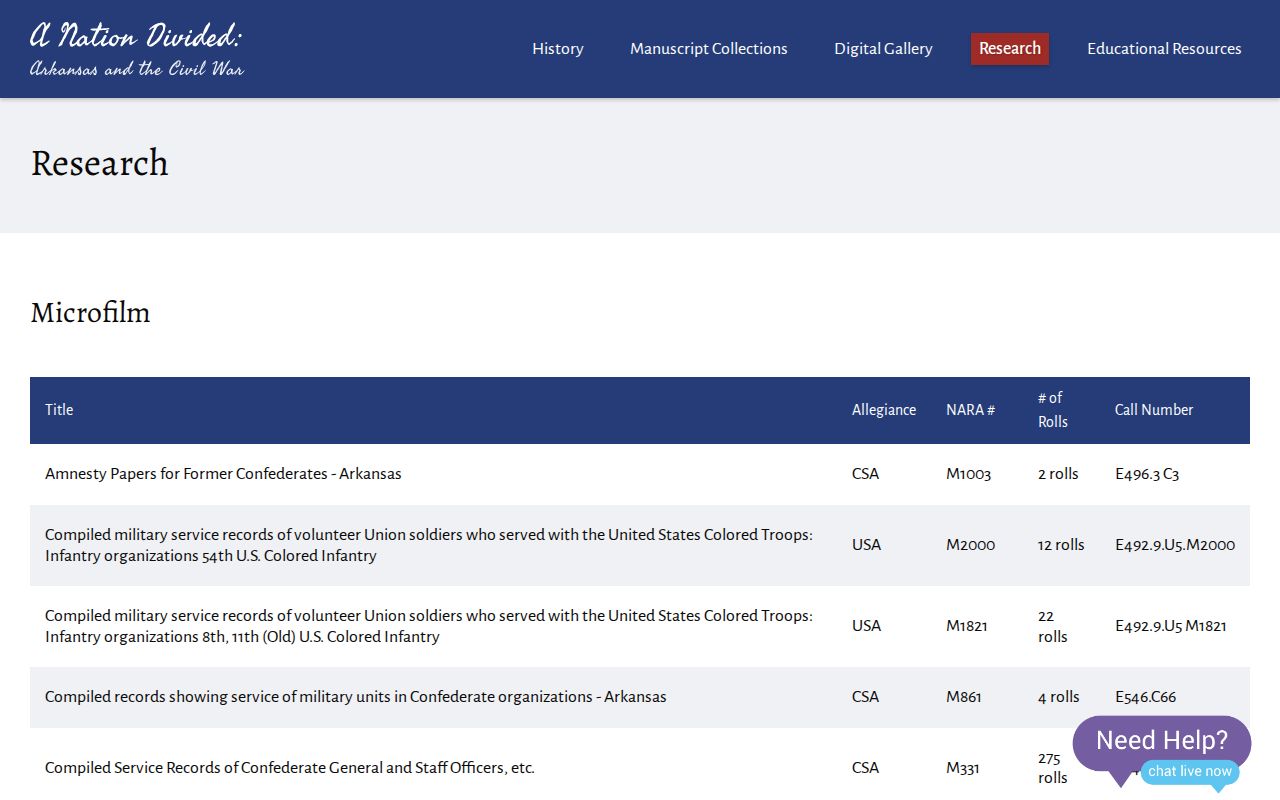
The research landing page is the practical route for planning shelf, database, map, and microfilm work in one visit.
Jacksonville Names in Digital Collections
No digitized Jacksonville directory run was verified. The useful online substitute is the CALS Butler Center digital collection, where historic Jacksonville images and documents may be searched alongside the physical catalog. Search a full name, then variants, a street, a school, a church, Arkansas Ordnance Plant, and LRAFB. Digital results supply context, but they do not turn an undated phone-book holding into a dated online series.
The CALS digital collections search provides the online gateway for Arkansas studies material.
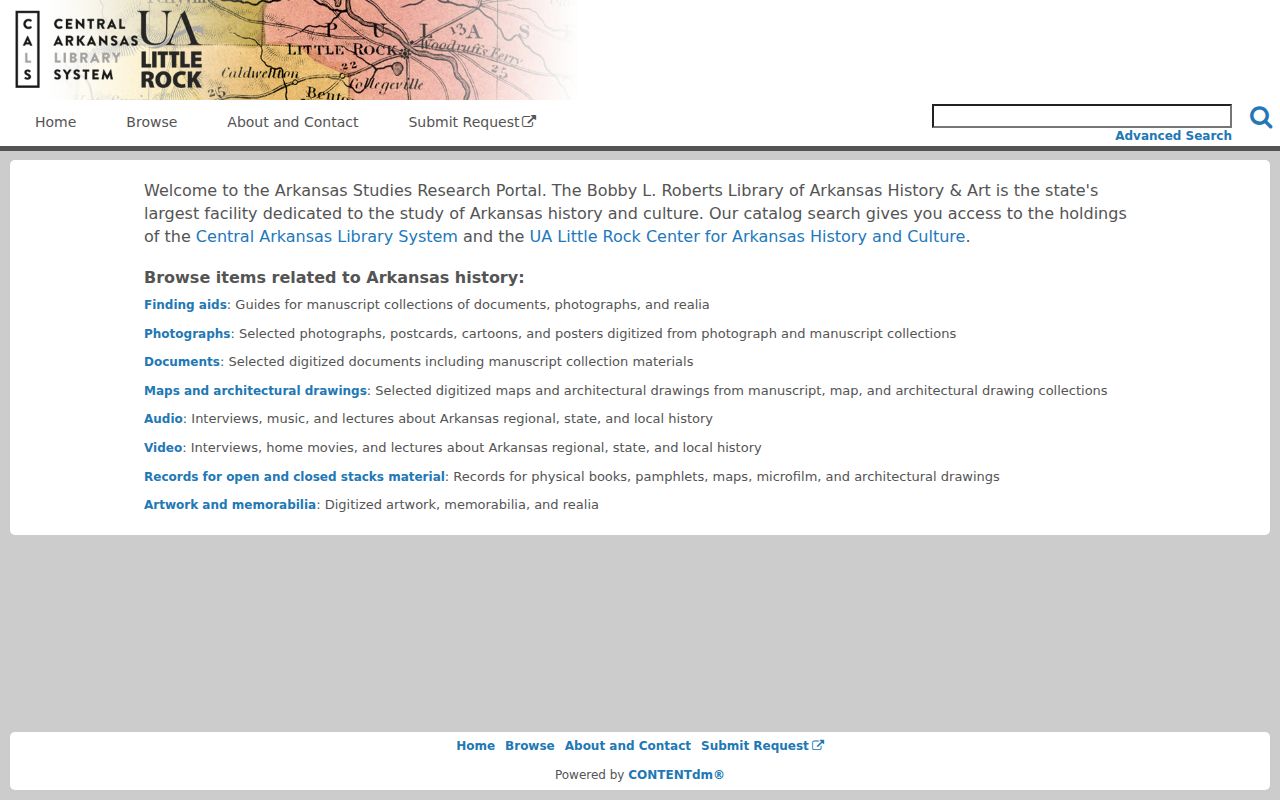
A digital item can add a date, institution, or scene to an entry, while the cited directory volume remains the source for the printed listing.
Newspapers fill another gap. The Arkansas Gazette's June 5, 1941 report on the ordnance plant is a dated local anchor, and The Leader is a Jacksonville newspaper lead. Exact database runs were not stated in the research, so search results must be cited by title and issue rather than described as complete coverage.
Trace Jacksonville Families by Directory
A careful Jacksonville city directory workflow moves through time in short, dated steps. It does not treat a missing listing as proof that a family left. The household may have used a rural mailing point, gone unlisted, changed its printed name, or moved during one of Jacksonville's sharp population shifts. Pairing each directory clue with a census, deed, map, or newspaper item makes the chain much stronger.
- Ask CALS staff for every Jacksonville Phone Book year and note the publisher, title page, and arrangement of each volume.
- Search the surname and plausible variants. Copy the full entry, page number, edition date, and key.
- For the early 1950s, compare the public 1950 census with the 1952 Pulaski County Rural Directory.
- Use Pulaski deed and survey records to test an address or land clue, without assuming the owner was the occupant.
- Search newspapers and family obituaries for moves, relatives, events, and a final dated appearance.
The 1960 federal census will not open until 2032 under the 72-year rule. For the 1950s, that leaves the rural directory, local phone books, deeds, maps, schools, newspapers, and military-community sources to bridge the decade. Modern identity checks belong in the Jacksonville resident lookup, not in an old volume alone.
Jacksonville Directory Time Markers
Jacksonville did not grow as a smooth, long-established city series. County records are often the right framework before incorporation, and institution-led records become more useful during the wartime and air-base surges. These dates guide which shelf or archive to search next.
| Date | Jacksonville research shift |
|---|---|
| 1819 | Pulaski County land and probate coverage begins before Jacksonville existed as a city. |
| 1871-1872 | The post office and town plat make Jacksonville a more useful place-name in postal, plat, and newspaper work. |
| 1941 | Jacksonville incorporates as the Arkansas Ordnance Plant boom starts to reshape the community. |
| 1950-1952 | The public census and verified rural directory form the closest documented household pair. |
| 1955 | Little Rock Air Force Base opens after land purchases from more than 150 owners. |
| 1972 and 1985 | Verified UCA maps help test street continuity near later phone-book entries. |
These markers do not establish a publication year. They explain why county deeds, rural lists, and military records can matter more than an urban volume at some dates.
Map Jacksonville Directory Addresses
An address is only useful if it can be placed in the right period. UCA Archives lists Jacksonville maps from 1972 and 1985. Compare a printed street and house number with the closest map, then carry the likely parcel or legal description into Pulaski County land records. The maps contain no resident names. Their value is in showing street continuity, subdivision growth, and the physical setting around an entry.
No dated Jacksonville street-renumbering project was verified, and no Jacksonville Sanborn edition was found in the authoritative search. Do not invent either one to explain a mismatch. If a current address fails, try the name in nearby years, a rural route, a mailing address, a subdivision name, or a deed description. For present address-keyed research, the Jacksonville directory by street follows the county parcel and deed route.
Note: A historic map can place a street, but it cannot prove that a named person lived at one house.
Jacksonville Community Directory Sources
The Jacksonville Museum of Military History adds a focused archive for households linked to the Arkansas Ordnance Plant, Little Rock Air Force Base, the Arkansas Air National Guard, and the 308th Strategic Missile Wing. It occupies the former ordnance plant administration building and reported more than 5,000 archival and collection items in official 2009 commission minutes. Its research room has no verified public online catalog, so ask about name indexes, access rules, and reproduction before visiting.
Church and lodge names can reveal people missed by conventional Jacksonville printed listings. Mt. Pisgah Baptist Church existed by 1870 and also served as a school. Forward March Circle No. 314, organized in 1910, built a Black community lodge and social center. Search those institution names in newspapers, deeds, and archives. Obituaries from Moore's Jacksonville Funeral Home and A Natural State Funeral Service can add aliases, relatives, service details, and burial clues, though each family-supplied fact still needs a second source.
The result is a layered local record, not a single perfect roll. Jacksonville's directory clues become most reliable when a volume, map, census line, deed, and community source point to the same person and place.